



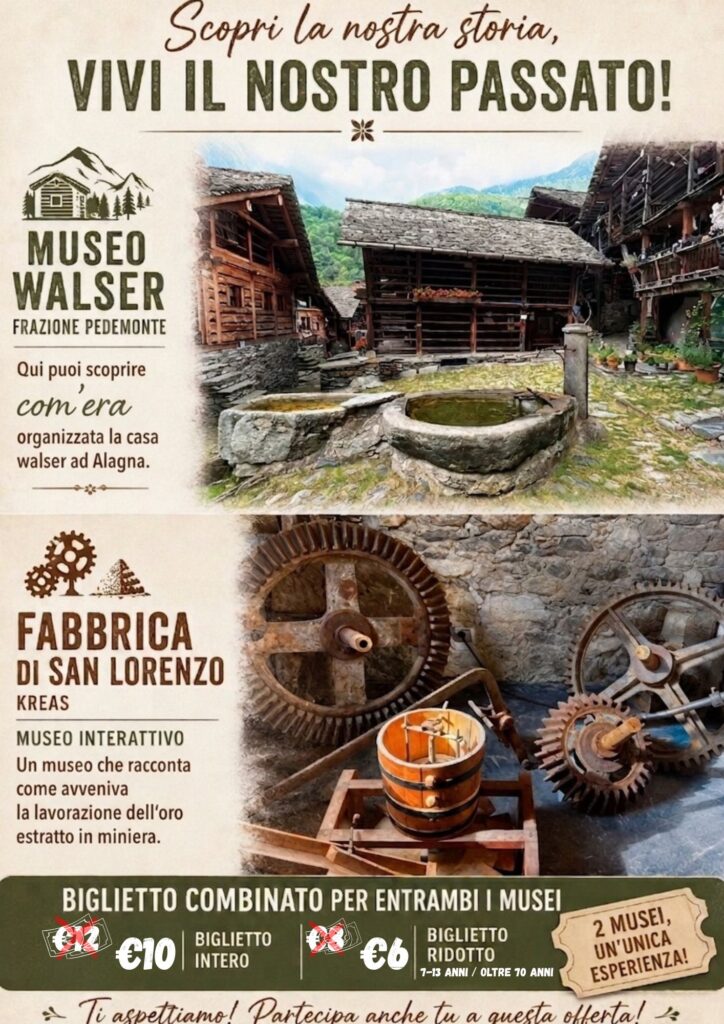
Inaugurated in 1976, the Walser Museum of Alagna is a perfectly preserved mountain hut dating back to 1628.
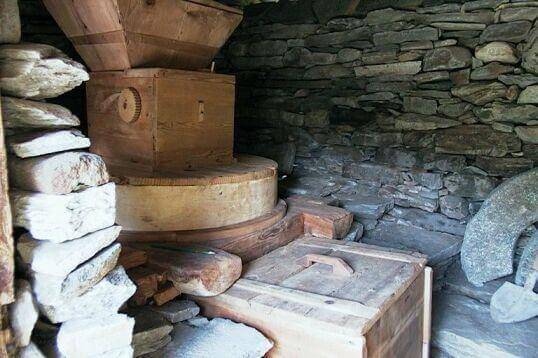
The Walser people built dwellings that, under the same roof, housed the stable, areas for rest, social life, and food storage, forming a harmonious synthesis of the fundamental needs of these high-altitude farmers. The museum shows how the ancient Walser were able to create an efficient system within the home, well suited to their need for self-sufficiency, and tells the story of daily life through everyday tools, following a carefully curated path through the material culture of the early inhabitants of Alagna.
The three-storey building has a dry-stone base on which rests the wooden Blockbau structure, made entirely of original wood, while the roof is covered with piode (blatte), stone slabs.
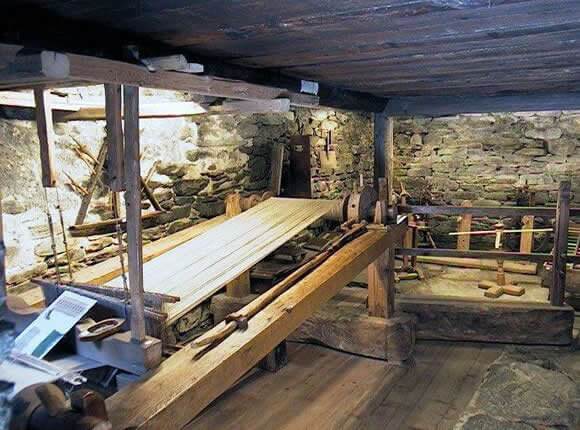
In the current museum layout, the semi-basement floor houses the stable (Godu), with a stone floor, the adjacent and communicating living room (Stand), with a wooden floor, the kitchen (Firhus) with tools for cooking, the room for milk processing, and the area for yarn preparation and hemp weaving.
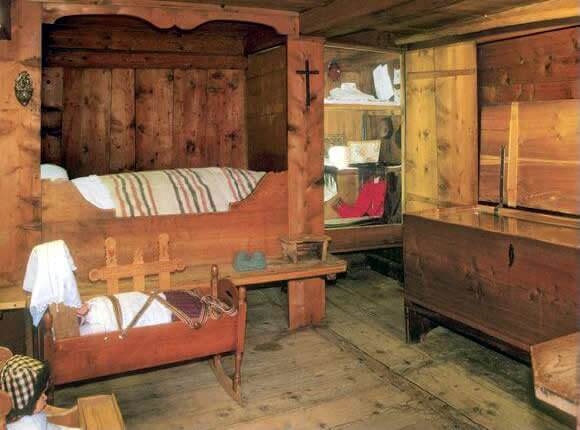
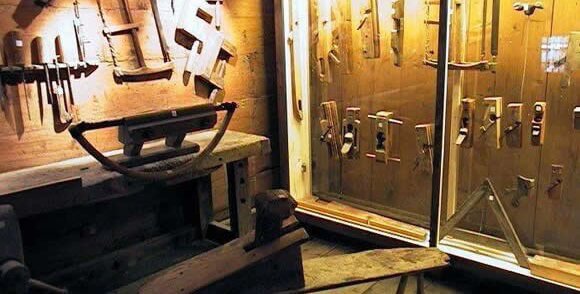
On the raised ground floor, above the stable, are the bedroom (Stuba) with its alcove, the room for storing carpentry tools, the area displaying handcrafted objects, and the document room.
On the top floor, visitors can see the hayloft (Stodal), displaying tools for agriculture and woodworking, and the pantry (Spicher), with shelves and racks used for storing cereals and foodstuffs. Surrounding the building are the perfectly preserved pole-supported balconies, a characteristic feature of the Walser houses of Alagna.
The creation of the museum would not have been possible without the contribution of:
The organizing committee composed of Alagna Valsesia citizens
And honorary citizens of Alagna:
In memory of:
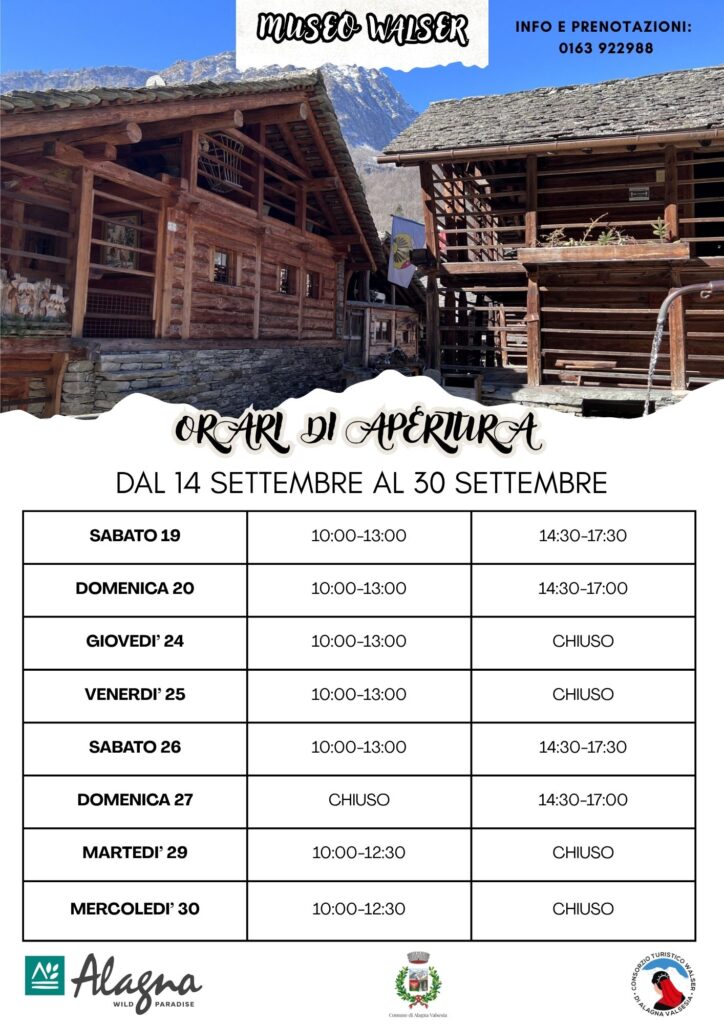
From the 14th and the 30th of September the museum will be open every weekend and Thursday 24th, Friday 25th, Tuesday 29th and Wednesday 30th.
Starting in October, the museum will be open only by reservation for groups of at least 8 to 10 people, made by calling the Alagna Tourist Office.
For more information about museums and guided tours, contact the Tourism Office of Alagna Valsesia.
