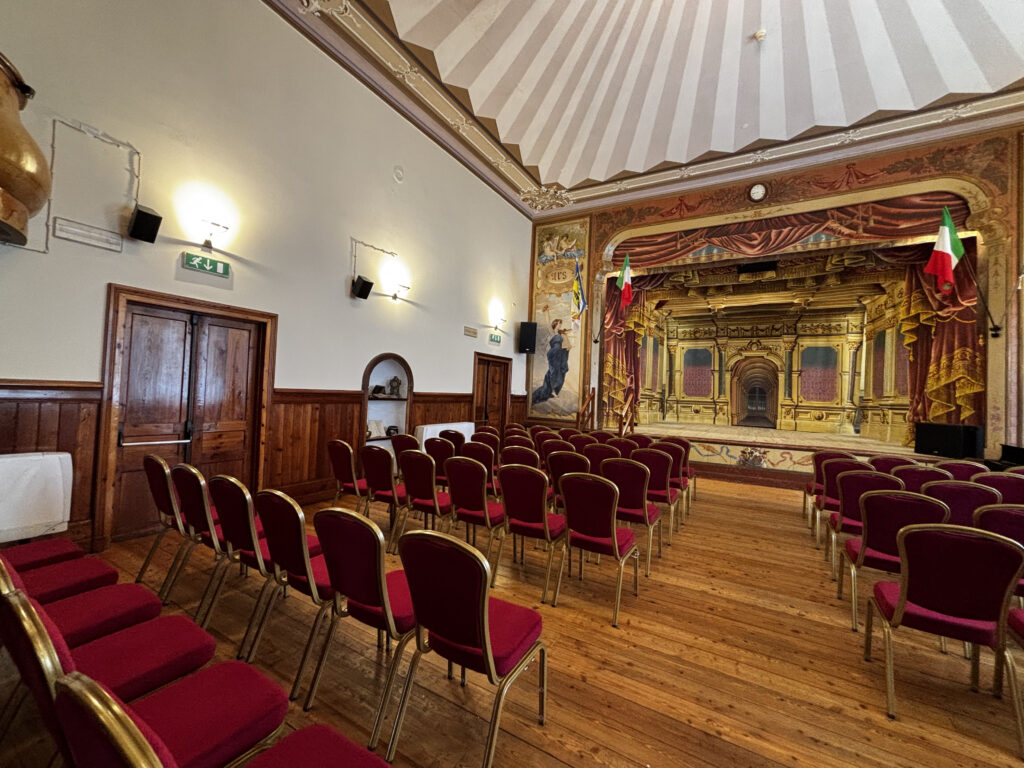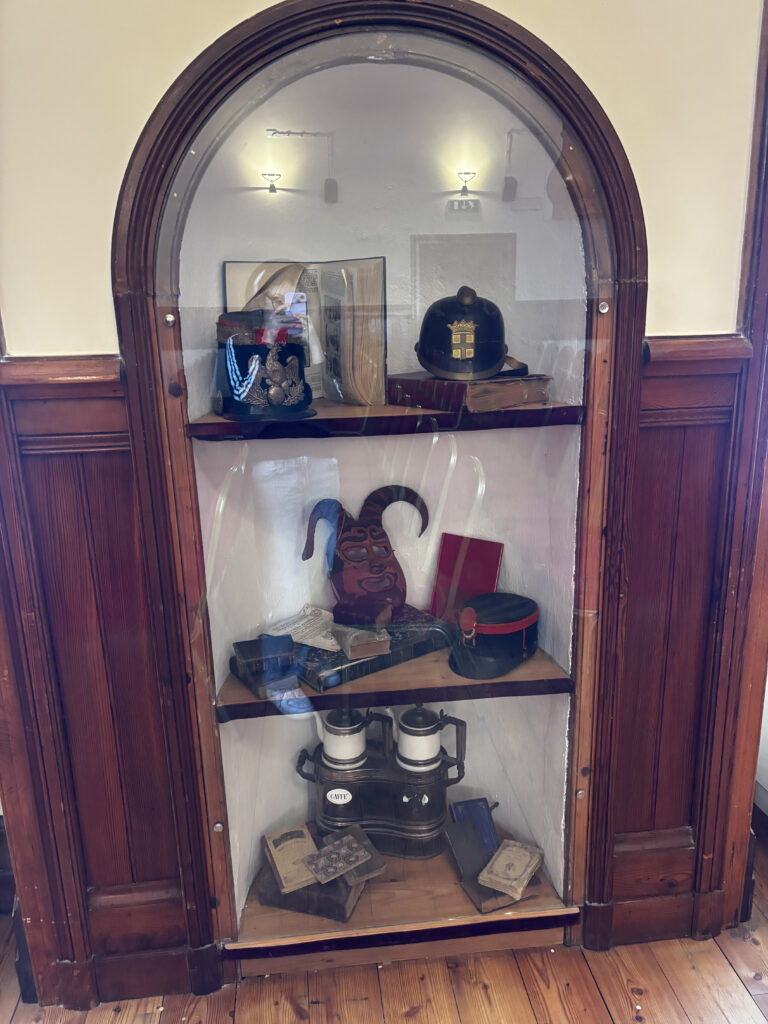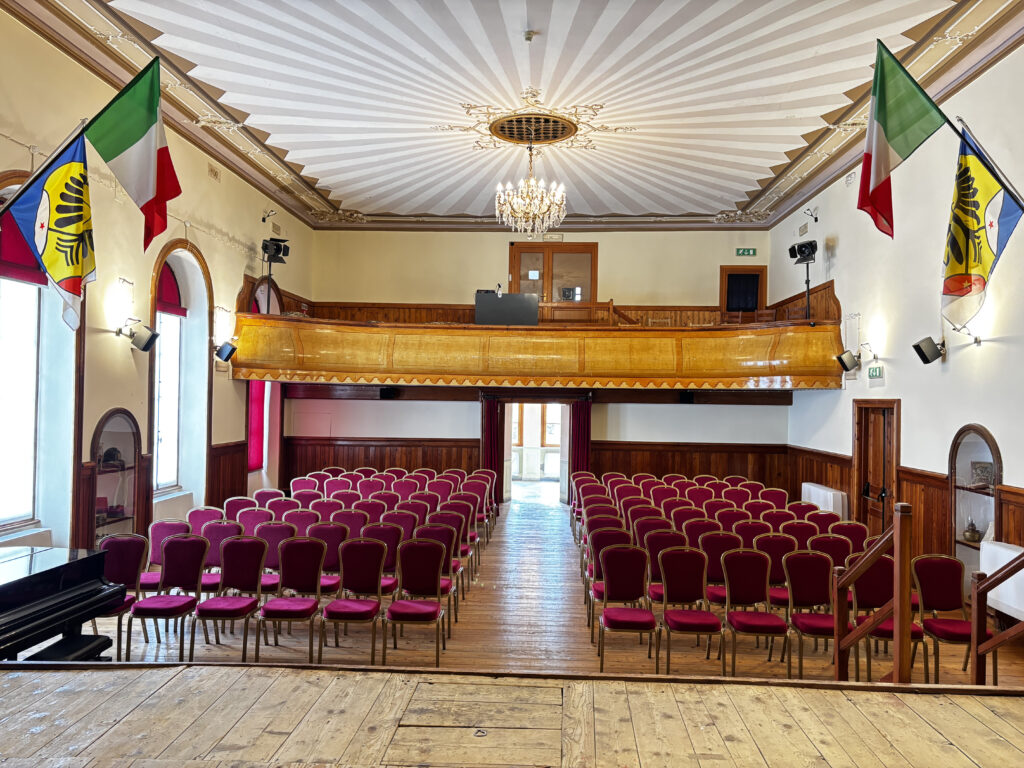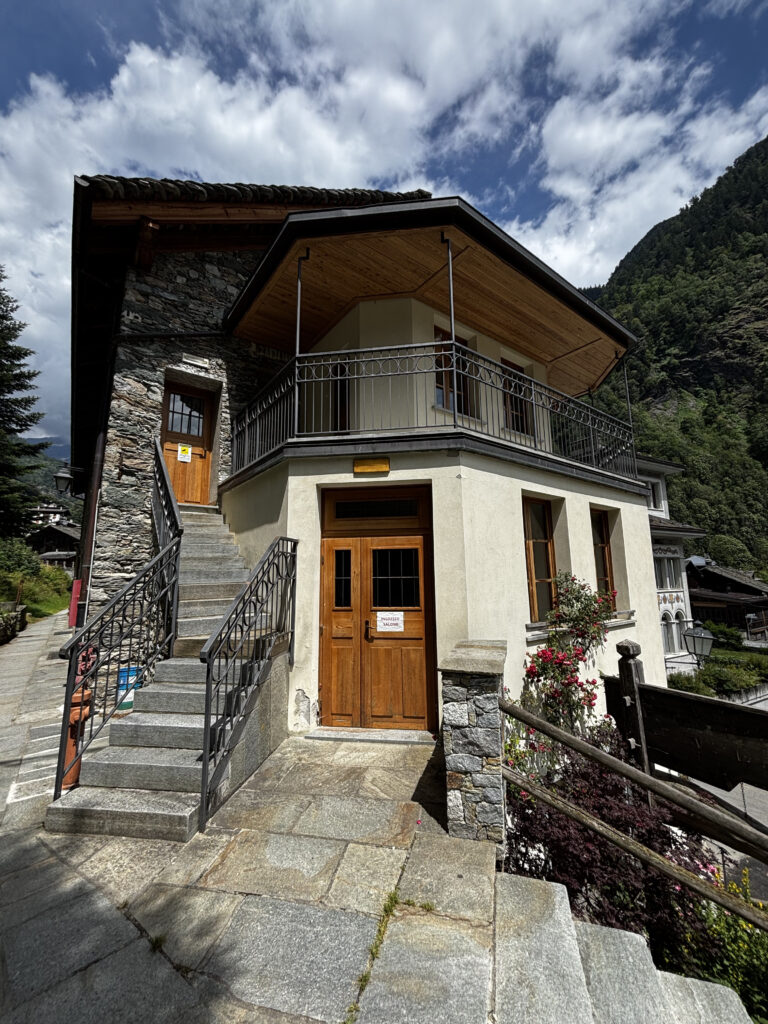



The "Teatro dell’Unione Alagnese", located in Pedemonte, was inaugurated on December 30, 1900, and preserves inside the allegories of Ars and Labor, works by the Valsesian painter Camillo Verno (Campertogno 1870–1942).
In those days it was customary to stage sacred performances on the church forecourt with improvised and volunteer actors. Sacred texts, in particular the Passion of Christ, were performed in the middle of winter, with spectators seated on benches or chairs they brought themselves and wrapped in large blankets. The performances were held in the Walser language and lasted a long time. At the end of the performance all the actors, except the “devil” and the “executioner”, went to the church for the blessing, followed in procession by the audience.
In the following years, in order not to perform outdoors and lacking a public structure, these “temporary theatrical societies” had to rely on the hospitality of innkeepers to organize entertainments and civic events.
Thus, in 1855 the Theatrical Society was established, which on February 20, 1881 became the Philodramatic Society. The proceeds from events, dances, performances, and remittances from emigrants abroad flowed into a fund for the construction of a permanent theater, and the Philodramatic Society carried the initiative forward, facing opposition from part of the population who would have preferred the construction of new schools or the expansion of the cemetery.
Finally, in 1898, having overcome all resistance, the President of the Promoting Committee, Giovanni Viotti, publicly announced the start of construction of the Teatro dell’Unione Alagnese and entrusted the task to Pietro Viotti, who was both the designer of the project and the site manager.
A fervent supporter of the construction and a practical backer of the project was Michele Necer, who, having emigrated to Switzerland, maintained an extensive correspondence that revealed his desire to create a common home for all the people of Alagna. He also wished to install a cooperative dairy for all farmers, to be located in the basement of the Unione Alagnese under optimal hygienic conditions. Ercole Soriani provided the stage sets and theatrical furnishings. The list of benefactors grew, including donations of materials and free labor, but it was still necessary to take out a loan of £7,000 in favor of the Unione Alagnese, which was repaid within the time and terms set out in the contract.
To request use of the Teatro Unione Hall, click here
It is possible to scan the following QR code for direct access